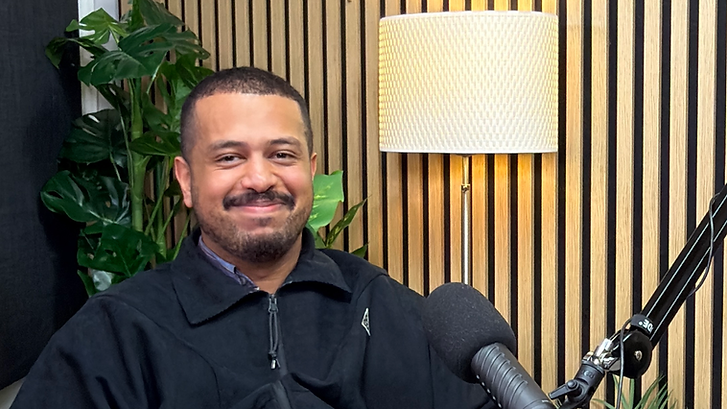
For Ali, the partnership represents something bigger than a one-off fundraising campaign.

By Jude Ower
UNICEF wants the games industry to play a greater role in supporting children around the world, using the power of gaming communities to raise awareness, generate funding and champion children’s rights.
In the latest episode of The Good Game Club, I speak to Ali Habib, Gaming Lead at UNICEF UK, about the organisation’s new partnership with PlanetPlay and the launch of the PlayForEveryChild PC Games Charity Bundle for UNICEF on 15 October 2026.
For Ali, the partnership represents something bigger than a one-off fundraising campaign. He explains how the games industry can build lasting relationships with UNICEF, from individual players and content creators to major publishers and studios. The conversation also explores the commercial challenges facing the industry and why accessible fundraising models can help studios turn their willingness to support children into practical action.
Beyond fundraising, we discuss the responsibility of the games industry towards young players, children’s rights in digital environments and the potential for games to support education, inclusion and wellbeing. The discussion offers a wider perspective on how gaming can make a positive contribution to children's lives.
This interview with Ali Habib – hosted by Jude Ower - has been edited and condensed from the original Good Game Club podcast for length and clarity.
Disclaimer: Jude Ower MBE is Chief Strategy Officer at PlanetPlay.
Could you introduce yourself and tell us about your role at UNICEF?
My name is Ali. I'm the gaming lead for UNICEF UK. I've been in the role for just under three years, and essentially, I lead our gaming initiatives, our campaigns, our partnerships within the industry. And since then, we've been able to expand our footprint across the gaming industry.
Why is the games industry important to UNICEF?
I think what really sort of captivated me at the very beginning was the sense of community. So gaming, even for me, as someone who's been gaming, I guess since the word child, it brings so many people together, it fosters collaboration and it fosters a way for people to come and care about things as well.
UNICEF then sees this as a space, as a way for us to continue our messaging, continue our work. And then why PlanetPlay became such an important part of this is sort of brings a marketplace to that. So that way our messaging, our campaigns, our work on the ground could be then translated back to the games itself. So as these games are being sold via the PlanetPlay marketplace, UNICEF's work is also being championed, but also being supported at the same time.
UNICEF is so big, how do you then break it down to help people understand all the different programs and initiatives you've got going on? As well as being a way that you could fundraise for the projects you run, it's also a way to be able to reach people and raise awareness as well.
I look at other ways that we've done this in the past, like with sport, for example, you'll see UNICEF's brand on football team shirts, and some people may have never heard of UNICEF, but because of the association that they have with a football team or a player, they then make that connection and that makes them research what UNICEF is. That's what happened to me as a child. So probably the most famous one I can think of is the Barcelona partnership. And I think with gaming, that's the new digital space that we're in.
So, no matter what you care about, UNICEF will be there. Whether it's emergencies, climate, gender related issues, there's always something that UNICEF will do. And I think this is where it fits in really well, because we know that gamers are really passionate not just about their games, but also about what's going on around the world.
UNICEF has been really successful in raising the profile, raising awareness through sports. Do you see gaming as being like the next evolution?
I think sometimes also people make the mistake of comparing sport and gaming. They're very, very separate spaces. We're trying to take different approaches to the gaming space because we understand the audience a bit more. We also understand the components when it comes to things like esports, for example, and how that operates quite differently.
It's about listening to the community more, seeing what they care about, and then that way then they're able to understand what UNICEF is actually delivering, and then we can hopefully translate those supporters into contributors for UNICEF as well.
Tell us about the PlanetPlay bundle – it’s PC games, where does the money raised go and what impact will it have?
100% of the net profit that are sold via the PlanetPlay bundle, all of that will be going to our flexible funding. This allows us to continue that work. So, as people are buying these bundles, they are playing their games, they enjoy themselves, they also will know that by playing this game there are children that are being supported. There's two positive sides to being involved in this campaign.
How can we help gamers or players understand more about children's lives and children's rights in the work of UNICEF?
I think what we try and do a lot of the time is we try and listen to the children because at the end they are the experts when it comes to what's good for them. And then we utilize that to amplify those voices, ensure that child rights are respected, that their voices are heard, and at the same time, there are programs that UNICEF runs that goes hand in hand with this.
We have a thing called the RITEC Programme that we run in collaboration with the Lego Foundation, and that looks at how gaming can be good for children. And we use those to then go to studios and showcase the studies. Then they can implement how they can have child rights embedded within the gaming space as well. There are many ways to do it. I know a focus on this is on fundraising, but there are many things beyond that.
The work that you’re doing is really key to making sure that games are safe places for children to play. Do you also see it as a right to create games, and encouraging children to create?
We have a thing called the Game Changers Coalition. And the whole point of it is that we see a lot of women within the gaming space. We know that approximately around 50% of gamers are women. But when you look at decision making development, that just doesn't exist. So, now we're working with gaming publishers, studios and so on with governments across the world to get more women into Stem education, for them to then proceed and get involved in the gaming space. We do see a way to do that and actually do active things that will change the industry for the better.
How can games help families connect?
It's also the bond that it can create as well. And a lot of the time, like there might be, I don't know, like sometimes not a language barrier per se, but there's a barrier sometimes that you may have with your child or your sibling and so on. A game can really nullify all those barriers that have been put in place and allow people to sort of have a common language of just competing with each other in a helpful way.
Like even me growing up, playing with my family, playing with my siblings, my friends, that's how we bonded all of the time.
Why do you think the industry is seeing supporting children's rights and wellbeing as part of its role?
From our perspective, I think this gives them an easy way to be involved. I know the industry is going through a lot of changes and challenges at the same time. So sometimes donating money or things of that nature can be quite difficult. What this partnership does is sort of allows them to donate their games to a marketplace.
How can the PlanetPlay partnership help studios contribute despite industry challenges?
Now we can hopefully grow this into moments throughout the year - we don't see this as like a one-time thing. Hopefully this PlanetPlay bundle is something that will keep growing in 2027 and 2028.
The PlanetPlay initiative is like a one-to-many relationship - I think working with NGOs and organizations like yourselves, it's important that it's really efficient.
For the players that are being involved, what's really exciting for this is yes, they're supporting UNICEF. Yes, they're buying these bundles. But at the same time, they're getting to enjoy a variety of games as well. They're not just buying one game to support one initiative, they're buying ten different ones. And hopefully their curiosity will continue sparking through this process.
What's the future for UNICEF in the games space?
I think for us is to continue doing what we're doing, but also just expanding our relationships with publishers and studios. We want to see a world where players see themselves as champions for UNICEF, so whether they have a creator that has a very, very small community or someone that's quite big, they can drive people to what we're doing. I think we've seen a lot of that. People really care about what's going on around the world, but they don't know how to help. This is probably one of the easiest ways to do so. And what's very helpful is because, again, this campaign is for our flexible funding. It covers every single area of a child's life.
We want to sort of see a world where the industry itself is pushing for it, but also gamers and creators also doing that.
The PlayForEveryChild PC Games Charity Bundle for UNICEF is available exclusively through the PlanetPlay marketplace until 22 October. UNICEF does not endorse any brand, company, product or service.
The new Good Game Club episode featuring Ali Habib is released on 15 October 2026 and is available to watch on Good Game Club’s YouTube channel Good Game Club Podcast - YouTube.