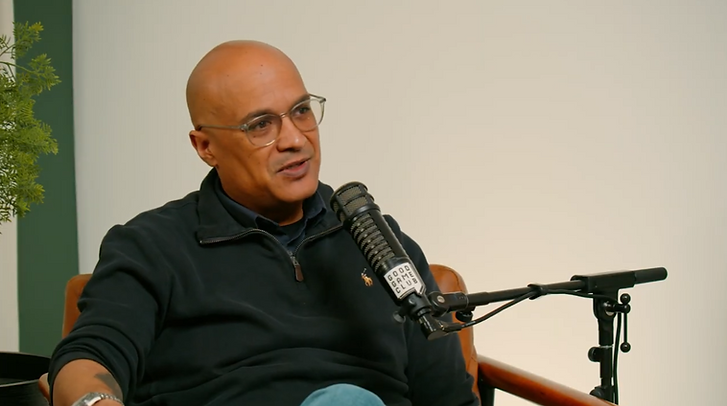
With a 26-year career spanning some of the biggest companies and platforms in gaming - including EA, BioWare, Google, YouTube, Meta and Xbox - Leo Olebe has experienced the industry from almost every angle.
By Jude Ower
With a 26-year career spanning some of the biggest companies and platforms in gaming - including EA, BioWare, Google, YouTube, Meta and Xbox - Leo Olebe has experienced the industry from almost every angle.
Today, as Board Chair of Games for Change, he is focused on how games can create opportunity, strengthen communities and make a positive difference in people’s lives.
At the heart of Olebe’s thinking is a deceptively simple philosophy: “Bring people in, don’t push people out.” For him, inclusion is not simply a moral argument. Different ideas, experiences and perspectives make businesses more creative, help them understand their audiences and can ultimately lead to better commercial outcomes.
In the latest episode of the Good Game Club, Olebe joins me and my co-host Mathias Gredal Nørvig to discuss why belonging matters, how games can reach people traditional media cannot, and what major technology companies can do to support positive change.
He also looks ahead to the next five years of gaming - predicting an industry defined not only by growth, but by smaller, highly engaged communities and more opportunities for people to find experiences and places where they belong.
This interview - hosted by Jude Ower and Mathias Gredal Nørvig - has been edited and condensed from the original Good Game Club podcast for length and clarity.
Jude Ower: I’d love you to introduce yourself – tell us about who Leo Olebe is.
Who's Leo? I don't know. Still figuring it out. I usually answer this question in two parts. And the first part is I'm just a 12-year-old gamer. I just like comic books and movies and video games and spreading positivity and light and all of that fun stuff. If we're having fun playing games, that's the first part of who Leo is, somebody who likes to have fun playing video games.
The second piece, the professional bits, is I’ve been in the games industry for I think this is the start of my 26th year in games. I spent my first 15 years marketing games, so I shipped over 100 games from Disney to Warner Brothers, BioWare, EA, Kabam, Zynga.
Then in the last 12 years or so, I've worked on big platforms, so I ran the games business at Meta. I worked in business development partnerships for Google Play. I was the Global Head of Gaming at YouTube and then most recently was at Xbox as the Vice President of Global Partnerships.
Mathias Gredal Nørvig: You’ve seen all the companies from the inside. I’m curious to hear, when you think of your continuous championing of diversity and inclusivity, why is that not just a moral standpoint? Why is it a business imperative for big corporates as well?
At its heart, diversity of the ideas and people who have different experiences and think differently lends us to be more creative. It lends us to be better problem solvers. It lends us to have a better depth of understanding about the people who are playing our games, the people who we want to play our games, whatever the communities that we're operating in.
To me, without being able to quote all of the PhD studies and all of the data - which very clearly shows that diverse teams equals better business outcomes. Full stop. Like, I don't think that's a debate anymore. Fundamentally, it's just about, how do we create amazing experiences for people?
We do that by understanding everybody. And everybody is literally that - it's everybody with a capital E versus, oh, we're just talking to this person or that person or this person. The type of world that I want to live in is one where everybody has the opportunity to find an incredible experience. Everybody can find their tribe. Everybody can do something that lends positivity. And if we’re working towards that, then we’re doing something great. I always like to challenge ourselves to be as open as possible.
Jude Ower: You are also part of the Games for Change board. What attracted you to take on that role, and what are the best-in-class examples you’ve seen of gaming for positive change?
If I start with my ‘Why?’ Susannah Pollock (President of Games for Change) is absolutely incredible. The Games for Change organisation is amazing. They fundamentally think about interactive entertainment as a way to drive positive change in people's communities. And that could be through work with NGOs. It could be through work with game developers. It could be work with universities, it could be work with for-profit companies, the entire spectrum.
It's like, what does, you know, an interactive experience mean in various contexts. And how do we bring people in. That's the start of it.
There's somebody who has a games company that's a network of doctors that teaches surgeons how to do better sutures. And you're like, well, that's kind of awesome. And then they have all of these studies to show that if a surgeon plays a game and they practice their sutures, they're actually better surgeons and they have more positive medical outcomes.
And then there's all sorts of games that drive awareness of hunger crisis. There's games that drive awareness of the environment. There are all sorts of different ways that gaming, I'll say interactive entertainment in general, is helping people.
One example that I found deeply meaningful was Games for Change I believe produced an interactive experience called ‘On The Morning You Wake.’ For those of you who may not be aware, at some point in the past the entire state of Hawaii received a text message that said, ‘Nuclear threat inbound. This is not a drill.’ Like that. And every single person in the state received the message at the same time. So, this is like a game that explores how you feel in that moment. What becomes important? Who do you want to talk to? What is your self-reflection on the life that you’ve led?
Jude Ower: I love the examples you share because that’s what Games for Change is all about.
It's connecting people to experiences that they might not otherwise see or understand what they're going through. At the end of the day, if we can help people by sharing something incredible that they can engage with, then we're doing a good thing.
It's not prescriptive. There's no one right way to do stuff. There's no ‘Oh, you're a for profit company, so you're bad’ or ‘You only do these types of games, so you're really good.’ It's not about that at all. There are so many different ways to use this incredible technology to reach people and motivate people and help people. And as far as I'm concerned, so long as we're doing those things, we're like moving in the right direction.
Mathias Gredal Nørvig: How do NGOs help amplify the shared narratives and the vocabulary around doing good through games?
When you work with NGOs, it’s another mechanism by which to reach underserved populations. Another mechanism to unlock creativity in terms of how you can reach those people, how you can tell unique and interesting stories. And amplify the broader message.
It goes back to the point about inclusion. Broadly speaking. The more people that you include, the more opportunity you have to help people who might not otherwise be reached. Because you never know where the next opportunity is going to come from.
Jude Ower: You’ve worked with the major platforms, if you think about the reach that they have, how can they support new and emerging studios, especially in emerging markets?
Platforms equal reach, right? If you take a platform like YouTube, when I was at YouTube, we had over 500 million daily logged in viewers of YouTube content. That's people logged in and watching gaming content, everything from Roblox to Minecraft to games none of us have ever heard of - to watching people play competitive esports. And everything in between.
The opportunity it creates for new developers is in its simplest form, reach. And when platforms do a good job, they'll provide tools and technology to amplify reach or to reach very specific communities. You can find an audience that's going to fall in love with whatever it is that you're doing. And that's where platforms are at their best.
Mathias Gredal Nørvig: What do you wish parents and policymakers better understood about what gaming can do?
People need to first up understand how important it is to belong, and that everybody has something that they can contribute. Everybody has a unique set of ideas and circumstances. Every human on this earth has intrinsic value.
When I think about my ‘Why?’ of gaming, it's like gaming creates spaces where people's dreams can come true and they can find their tribe, and they can figure out a way that they can thrive. Gone are the days of gamers are just troglodytes hanging out in the dungeon. That's the power of games where people have the opportunity to fully realise who they are. Maybe that's in a fantasy world, maybe that's in a real world. If we’re doing our best job, we’re allowing people the space and the opportunity to use their imaginations to their heart’s delight.
I think the opportunity for meaningful impact that these gaming worlds create is absolutely phenomenal. It's incredible the power of games to change the world and to support people I think is limitless.
Mathias Gredal Nørvig: When you look more broadly, what role do you think the technology companies or larger companies can fulfil to best support positive initiatives?
How do you get these companies to lean in? Here’s the giant secret answer: ask. There are people who want to do good in this world everywhere. There are people in power who want to do good in this world. There are people with budgets who want to do good in this world. Oftentimes I’m asked, ‘What did it take to get Google to do this or to get YouTube to do that, or get Microsoft to lean in on XYZ or Meta to invest?’ The answer is, ask. Raise your hand and be willing to be the person who maybe takes a little bit of risk, and you'll be absolutely surprised the number of people who are willing to say yes.
Mathias Gredal Nørvig: If you wanted to help your company do better, what’s the best way to get that ask to the finish line?
The first part of the process is raise your hand and ask, and you'll be surprised at who's at least willing to listen. Then then the nuance of your question is how do you actually turn that into a ‘Yes?’ So, my next thing would be, show the data, talk about the communities that you can reach, the people that you can talk to, and how this drives more engaged audiences - put together what the business case is. But I think you have to build allies internally, so try to have an understanding of who's open and willing to these conversations. There are so many people who want to do good. This has been my experience. They just don't know how. There is some bravery that’s involved. Some obstinacy. A little bit of enthusiasm and passion that help to win people over to whatever it is that you’re trying to do. There are people filled with passion for driving positive change in the world all over the place.
Mathias Gredal Nørvig: Sometimes I’ve had the feeling that it’s the last effort that corporates turn on is the green or the good, and the first they turn off when there’s a bit of hardship.
That is absolutely an industry challenge. We'll find it all over the place. But that's where the persistence comes in. And the constant asking and being the loud voice in the room or even the small voice that yells a lot in order to try to get some energy and some attention. There are business realities and there's a cyclical nature to this stuff. But I think persistence is the key.
Jude Ower: One of the areas that we’re looking at is safety and security. Do you think there’s more that can be done to create safer online spaces for people to thrive?
The answer to that question will always be yes. I think there's always more that can be done. I think there are always more conversations to be had. I think that every human deserves the opportunity to be safe on the internet. And we will probably never invest enough.
The answer should always be do more. And it should be more conversations with parents, more conversations with students, more conversations with kids, more conversations with corporations. With the speed of AI and agentic AI and AGI, whatever you want to talk about, there will never be enough education to be had. That’s one part of the answer.
My own personal experience as a parent of three teenagers is we also have to very deeply listen to young people. I think they are more sophisticated, more intelligent, more savvy about safety and privacy and online activity than we believe they are. When I actually dive deep into the conversation with my kids about this stuff, they're thinking about issues way more deeply than we ever were.
When adults think that we're the only ones with the answer, we're already doing the wrong thing, right? In my whole thing of bring people in, don't push people out, part of that is understanding that teenagers and young adults are super sophisticated when it comes to these online worlds and communicating with each other.
Mathias Gredal Nørvig: Can you elaborate more about bringing people in, about how you see it?
I happen to be writing a book on the topic. The idea is really simple. If we are creating open spaces and we're creating opportunity for people and we're lowering barriers, barriers to entry, if we're bringing people in, you're probably on the right track.
If we are doing the opposite, if we are pushing people out, if we are building barriers to entry, if we are limiting things in scope, then maybe we should think about something a little bit more.
The core of bring people in, don't push people out is to be as non-judgmental as possible. There are ideas all over the place that are interesting and amazing and awesome, and they might be very different from how I perceive the world, but that's okay too. This is really a measure by which to say, am I bringing people in, am I on the right track? Or am I pushing people out? It’s just trying to encourage folks to be more open in how they approach the world. And then also give them the support they need to have an impact on the world around you.
Jude Ower: Finally, what do you think the games industry will look like in five years’ time?
I'll give you the business answer and then I'll give you the human answer. I think from a business perspective, I see the games industry returning to significant growth. In five years, mobile is bigger, PC is bigger and console are bigger. More and more people will be playing games, invested in games. They'll find more great gameplay opportunities. I think what we'll also see on the business side, though, is I think we'll see many, many more niche communities and niche products.
If there's a great game or a great experience for a small community - I'm talking 10,000 to 20,000 people - that's enough to build something amazing and awesome and have a successful business. I think we're going to see more and more games and experiences that are targeted at bespoke or niche communities. And I think the games industry, broadly speaking, will grow. That's my business answer.
My human answer is, I think that gaming will continue to be the leading form of engagement and entertainment on the planet. People will continue to find those incredible experiences that they're going to fall in love with. And I think we will finally realise the power of giving people the opportunity to find their community and find their tribe. I think that's what the next five years and games will do is we'll find a lot more people who are happy, and they are engaged in their communities in ways that maybe we've never even thought of.
Watch or listen to the full conversation with Leo Olebe – ‘Finding Your Tribe Through Games’ - on the Good Game Club podcast here Good Game Club Podcast - YouTube.